
Lobo, the intergalactic bounty hunter beloved by comic book fans, is a character as captivating as he is controversial. Created by Roger Slifer and Keith Giffen, Lobo first appeared in Omega Men #3 in 1983.
However, it was in the 1990s, thanks to Simon Bisley‘s redesign, that Lobo became an iconic figure.
As a dedicated fan of Bisley, though not a professional journalist, I have delved deeply into this subject, conducting extensive research and reading numerous interviews. Some of these exchanges were personal conversations I had with Bisley himself.
The Origins of Lobo Before Bisley
Lobo first appeared in Omega Men #3 in June 1983, created by Roger Slifer and Keith Giffen. In his early days, Lobo was quite different from the character we know today. Initially depicted as a villain, he was a minor character who didn’t immediately capture the imagination of the comic book audience.
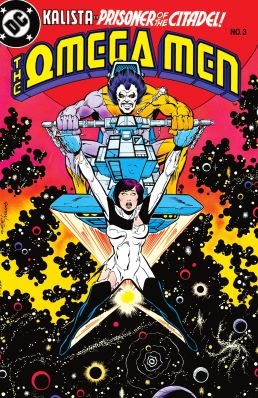
In his early appearances, Lobo was more of a traditional villain—a ruthless and bloodthirsty mercenary from the planet Czarnia, dressed in orange and purple spandex. His musculature wasn’t particularly developed compared to a standard character of that era.
Lobo’s name, which is a Khund dialect word meaning “he who devours your entrails and thoroughly enjoys it”, already hinted at the extreme nature of the character. However, this early incarnation lacked the dark humor and over-the-top personality that would later define him.
Transition Period and the Influence of Giffen and Grant
Throughout the mid to late 1980s, the character of Lobo underwent several changes. During this transition period, some of the foundations for Lobo’s evolution from a traditional villain to the anti-hero he would eventually become were laid. Writers and artists began to infuse the character with a more satirical edge, playing up his excessive violence and ruthless behavior in a way that bordered on parody.
Keith Giffen, one of Lobo’s co-creators, played a significant role in shaping his early development. Giffen’s unique approach to storytelling, which often included elements of dark comedy and satire, began to influence how Lobo was portrayed. This set the stage for the radical transformation that would occur in the 1990s.
Alan Grant, another influential writer, also contributed to Lobo’s evolving persona. Grant’s collaboration with Giffen on L.E.G.I.O.N. and other titles helped refine Lobo’s character, emphasizing his anarchic and irreverent nature. This period saw Lobo transition from a straightforward villain to a more complex and unpredictable anti-hero. To make the recipe perfect, however, they were missing a crucial element: a redesign that matched their ambitions, a talented artist who would understand the character and be capable of changing the game. They wouldn’t be disappointed…
Arrival of Simon Bisley

Photo of Simon Bisley from Comics Interview magazine #99
The arrival of Simon Bisley in the early 1990s marked a turning point for Lobo. Alan grand and Kieth Giffen contacted Bisley and asked him to rework Lobo visually.
Before working on Lobo, Bisley had made a name for himself with his work on series for 2000 AD like ABC Warriors or Sláine. His contributions to these series had demonstrated his ability to handle complex characters and stories with a distinctive style. Patrick Mills said on x.com (ex Twitter) that Bisley’s art was a real “game changer” on the Slaine series. Grant and Giffen recognized that Bisley could bring something special to Lobo, a new visual dimension that would perfectly complement their vision for the character.
Alan Grant said of Bisley in Comics Interview #99:
“I think this guy is probably a genius”
Bisley was known for pushing the boundaries of comics, making him an ideal choice to revitalize a character like Lobo. His innovative approach and willingness to break traditional artistic conventions convinced Grant and Giffen that he could transform Lobo into an iconic and unforgettable figure.
The Transformation by Simon Bisley
Simon Bisley, who started working on Lobo with the mini-series Lobo: The Last Czarnian in 1990, brought a distinct visual dimension that defined the character for decades to come.
He radically transformed Lobo’s image with his unique and bold artistic style.
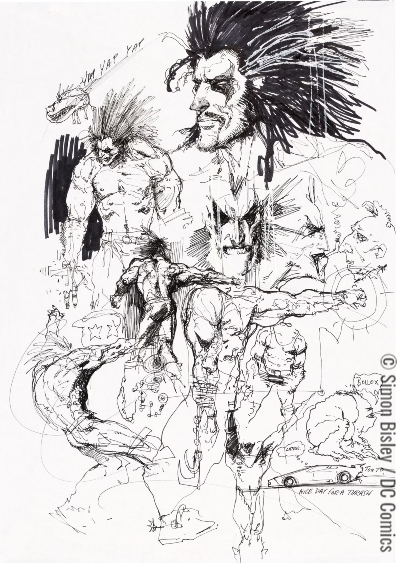
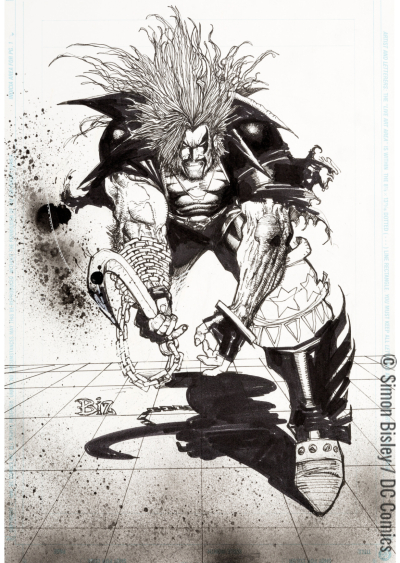
Studies of Lobo’s anatomy and inked drawing by Simon Bisley
In a 2021 interview, Simon Bisley reflects on his deep connection with the character, explaining that:
“I didn’t just create Lobo, I was Lobo!”
During the time he worked on the character, Bisley was living a wild and reckless life, much like Lobo himself. He spent his days with friends and motorcycle gangs, building and racing choppers across the British countryside with no particular purpose.
Bisley had the money, the looks, and the audacity, embodying the same brash, unrestrained spirit as Lobo. His life was a whirlwind of speed, fire, fury, and chaos, filled with dark thoughts and intense experiences.
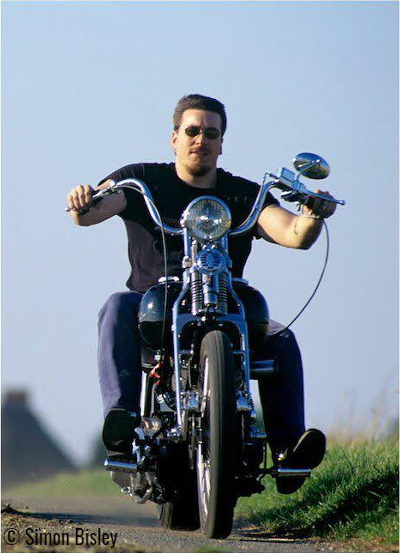
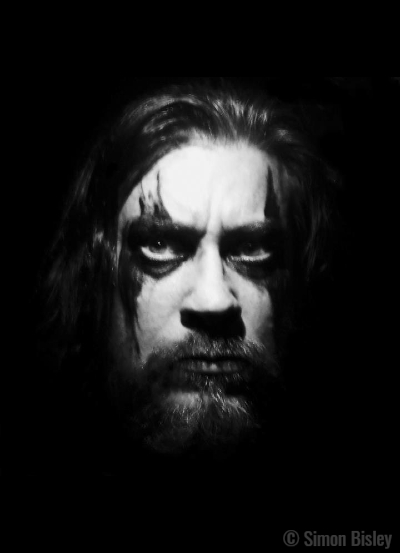
This period of his life was marked by honesty and excess, providing the raw material that he channeled into his work. Despite the violence and madness, Bisley now reflects on that time with a sense of nostalgia and awareness of his own personal growth. He emphasizes that his portrayal of Lobo came from a place of lived experience, capturing the character’s essence through a lens of authenticity and wild energy.
Bisley’s Lobo is highly muscular and incredibly detailed, often depicted with exaggerated facial expressions that enhance his wild character. He add big biker boots and skull knee guards to Lobo plus he added Lobo with the hook and chain around his arm and making Lobo much more muscular and now an “ultra badass” space biker. Creating a perfect blend of violence and dark comedy.
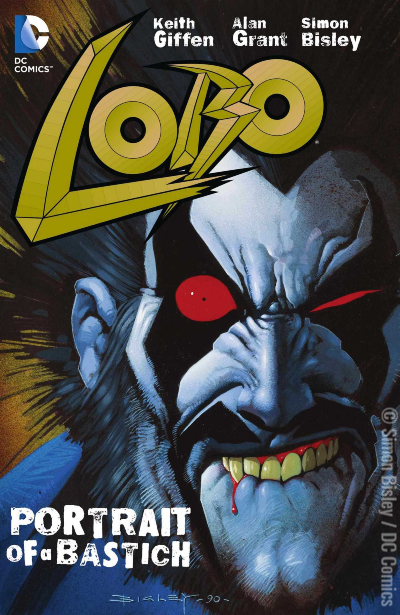
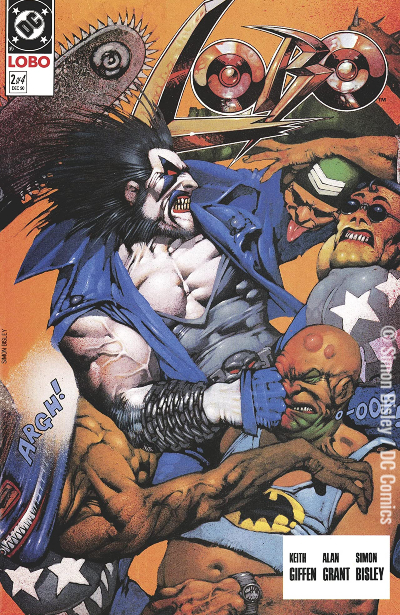
Covers of Lobo #1 and Lobo #2 painted by Bisley
The incredible comic book covers, the perfect mastery of inking, and the hyper-expressive style that Bisley brought to Lobo have made him a fan favorite and set a visual standard for the character.
Simon Bisley also created lobo’s Dog “Dawg”, adding him in to the story even though he wasn’t in the script. Bisley would often add more than was written in the script to the point that Grant had to Rewrite sections of the book.
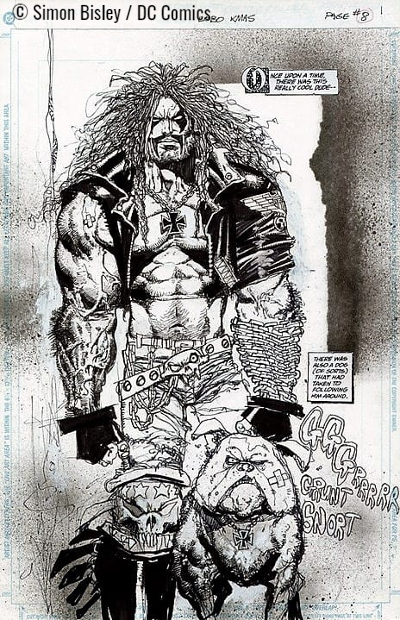
Dawg, Lobo’s accolite dog
A Lasting Legacy
Under the writing of authors like Alan Grant and the illustrations by Bisley, Lobo has enjoyed a series of successes. So much so that there were considerations to adapt him into a movie (by Roger Corman), cartoons, and into video games.
Alan Grant, who often collaborated with Bisley, wrote scripts that highlighted Lobo’s irreverent and destructive nature while maintaining a certain lightness. Bisley has said that:
“Doing the books was just a wonderful jam between me, Grant and Giffen.“
Simon Bisley’s work on Lobo not only defined the character but also influenced an entire generation of artists and comic book fans.
Lobo became a symbol of 90s counterculture, embodying total freedom and a rejection of social conventions. Lobo’s Back and Lobo: Paramilitary Christmas Special are two examples from this era where black humor and extreme violence were at the core of the stories.
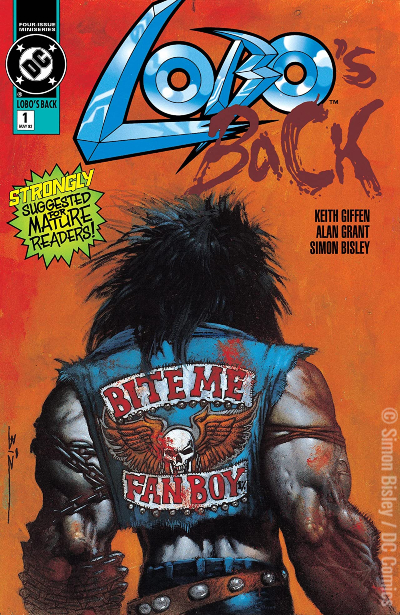
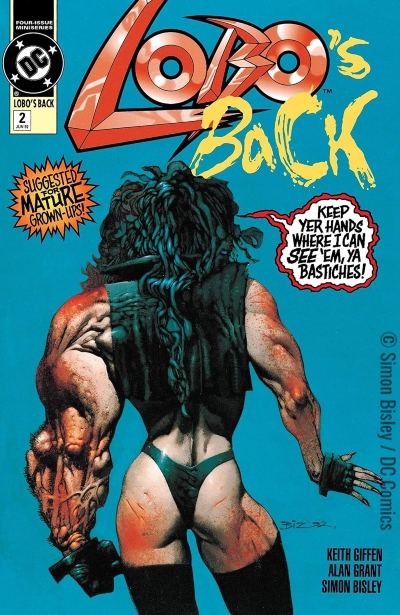
Covers of Lobo’s back #1 and Lobo’s back #2 painted by Bisley
Simon Bisley’s work on the mini-series Lobo: The Last Czarnian and subsequent titles cemented Lobo’s status as a cult favorite, transforming him into the iconic figure we know today. And 30 years later, Lobo’s legacy continues to influence the comic book industry profoundly.
Bisley’s dynamic art style and unapologetically irreverent character design set a new standard for anti-heroes, inspiring countless artists and writers. Lobo’s impact is evident in the continued popularity of darker, more complex characters in mainstream comics, highlighting Bisley’s lasting contribution to the genre.
The Evolution of Lobo: Balancing Dark Humor and Character Integrity
Lobo, once envisioned as a hyper-violent assassin and a caricature of dark comics with badass heroes, has undergone a significant transformation over the years. Initially designed to be a powerful and fearsome character, akin to a Bengal tiger, he gradually evolved into a somewhat foolish and comedic biker figure, without the influence and contributions of Bisley.
This evolution highlights the challenge of maintaining the complexity of an absurd character full of dark humor without falling into a mindless farce.
Lobo’s journey underscores the importance of thoughtful storytelling in comics. By carefully managing the blend of humor and complexity, creators can ensure their characters remain engaging and true to their roots. Involving the right people is certainly crucial! Simon Bisley, in addition to being a brilliant artist and painter, is a cornerstone of this series. He has infused the character with his own personality, humor and ideas into the story.
Lobo without Bisley is a bit like Led Zeppelin without John Bonham—it just doesn’t have the same punch or energy. It’s simply not the same. It’s probably time to involve him in new projects.

Simon Bisley – Lobo The Last Czarnian Cover Original Art (1991)
👉 Discover all the Lobo comic book covers by Simon Bisley. 👈
Sources :
https://www.thegutterreview.com/an-interview-with-simon-bisley-part-one/
https://www.planetebd.com/interview/simon-bisley/497.html
https://www.thegutterreview.com/interview-simon-bisley-still-the-dogs-bollocks-after-35-years/
https://www.comic-art.com/intervws/bisleyi1.htm
https://chaospopculture.com/tag/simon-bisley/
comics interview magazine #99
comics interview magazine #101
 Simon Bisley Fanboys